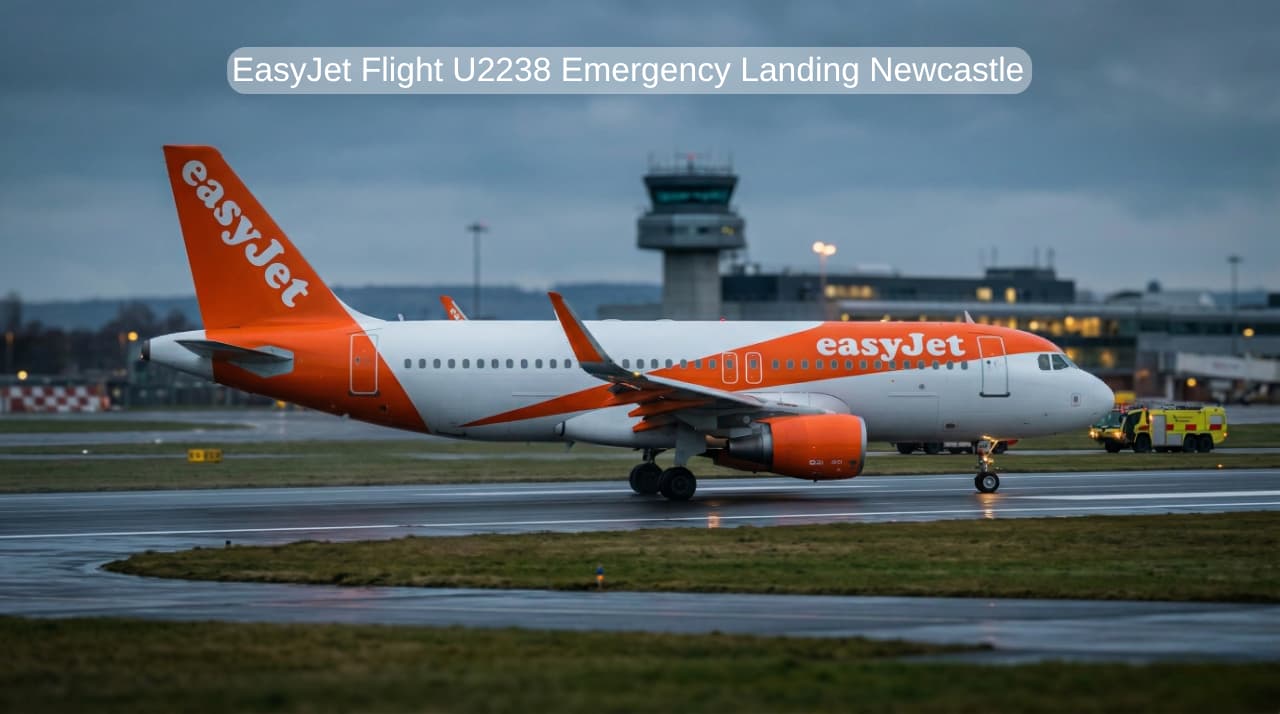
EasyJet Flight U2238 Emergency Landing Newcastle: Incident Details
The recent news regarding the easyjet flight u2238 emergency landing newcastle has generated significant interest. Many travellers and aviation enthusiasts want to know what happened. Therefore, it is important to look at the available facts.
Flight diversions can sound alarming to the general public. However, they are highly controlled aviation procedures. Airlines always prioritise safety above all other operational concerns.
This article explores the details surrounding the incident. We will explain standard emergency protocols and passenger rights. Finally, we will look at how airports handle these unexpected arrivals.
What Happened During the EasyJet Flight U2238 Emergency Landing Newcastle?
Flight U2238 is a standard route operated by easyJet. The route typically connects Northern England with other major UK hubs. Recently, search trends highlighted an incident involving this specific flight path.
Information surrounding the easyjet flight u2238 emergency landing newcastle remains limited at this time. Aviation authorities often take time to release official reports. As a result, we must rely on standard operational facts regarding diversions.
Usually, a flight diverts due to sudden operational needs. This could involve a technical fault or a passenger medical emergency. The flight crew makes a swift decision to land safely.
The Initial Crew Response
When an issue arises, the flight crew acts immediately. Pilots assess the situation using strict aviation checklists. Meanwhile, cabin crew members secure the passenger cabin efficiently.
If the situation requires it, the pilots contact air traffic control. They request a priority landing at the nearest suitable airport. Newcastle International Airport is well-equipped to handle such urgent requests.
Clear Passenger Communication
During an emergency landing, communication is carefully managed. The captain will inform passengers about the diversion. They use calm and clear language to prevent unnecessary panic.
Passengers are instructed to remain seated and secure their seatbelts. In addition, the crew might prepare the cabin for a rapid descent. Passenger safety is the primary focus during these critical moments.
Standard Protocols for Mid-Air Emergencies
Emergency landings happen for a few common reasons. Most are precautionary rather than life-threatening. Therefore, passengers should understand the typical triggers for a diversion.
Managing Medical Emergencies Onboard
A severe medical issue is a frequent cause of diversions. If a passenger suffers a heart attack, the plane must land. Time is critical for emergency medical treatment.
Cabin crew members are highly trained in basic first aid. However, they cannot replace professional hospital care. As a result, the captain will always divert to the nearest medical facility.
Handling Technical or Mechanical Alerts
Modern aircraft feature highly advanced sensor systems. These sensors detect even minor anomalies in engine performance. If a warning light appears, pilots act with extreme caution.
They will not risk continuing a long journey. Instead, they land the plane to allow engineers to inspect it. This incredibly cautious approach prevents major aviation accidents.
Navigating Severe Weather Conditions
Weather can also force an unexpected landing. Sudden storms, high winds, or heavy fog disrupt flight paths. Pilots rely heavily on precise weather radars.
If the destination airport is closed, the flight must divert. Newcastle is often used as a safe alternative for northern flight routes.
Impact on Newcastle International Airport Operations
Newcastle International Airport is a major transport hub in the UK. It handles millions of passengers every single year. Therefore, it has highly robust emergency response capabilities.
When an aircraft declares an emergency, the airport activates its protocols. Fire and rescue teams are placed on immediate standby. They position themselves directly along the runway before the plane lands.
Runway Clearances and Delays
Air traffic controllers at Newcastle quickly clear the surrounding airspace. They ensure the incoming aircraft has a direct approach path. This reduces time in the air significantly.
They might instruct other flights to circle in holding patterns. This ensures the emergency flight has zero traffic ahead. Consequently, standard passenger flights may experience brief delays.
Coordinating Ground Emergency Services
Controllers also manage crucial ground communications. They talk directly to the airport fire commander. They provide exact details about the aircraft type and passenger numbers.
This allows the ground teams to prepare the correct equipment. Every second matters during an emergency response. Therefore, clear communication is absolutely vital for success.
Information for Passengers on Diverted Flights
Passengers experience significant delays during an emergency diversion. Knowing your rights under UK law is essential. The UK Civil Aviation Authority sets strict guidelines for airlines.
Airlines must provide a duty of care to all delayed passengers. This applies regardless of the reason for the delay. Therefore, you are entitled to certain basic provisions.
Understanding Your Right to Care
You have the right to receive timely updates. The airline staff must explain the next steps clearly. Furthermore, they must provide food and drink vouchers during long waits.
If the delay lasts overnight, hotel accommodation must be provided. The airline is also responsible for transport to and from the hotel. You should never be left stranded at the airport terminal.
Organising Onward Travel Arrangements
After an emergency landing, the airline must get you to your destination. They might repair the original aircraft quickly. Alternatively, they will provide a replacement plane for the journey.
Sometimes, they book passengers onto alternative commercial flights. In certain cases, they might arrange ground transport like coaches. Overall, the ultimate goal is to complete your journey safely.
Claiming Financial Compensation
Compensation rules depend heavily on the cause of the diversion. If the airline was at fault, you might claim money. For example, poor maintenance causing a technical fault is claimable.
However, airlines do not pay for extraordinary circumstances. This includes severe weather or sudden medical emergencies. You can check the official rules directly. [UK Civil Aviation Authority rules on flight delays to the UK CAA website]
How Flight Tracking Technology Helps
Technology plays a vital role during flight incidents. Websites and apps track aircraft movements in real time. This provides excellent transparency for the public and concerned families.
Monitoring Real-Time Radar Systems
Flight tracking platforms use advanced ADS-B technology. This system broadcasts the plane’s GPS location constantly. Therefore, anyone can see the flight’s altitude and speed.
When a flight squawks an emergency code, trackers highlight it. The code 7700 is the general emergency aviation signal. It quickly alerts all surrounding air traffic control centres.
Reassuring Concerned Relatives
Emergency landings often cause anxiety for waiting family members. Tracking apps offer immediate visual reassurance. They show the plane safely descending towards an airport.
Moreover, airlines use social media to post updates quickly. Twitter and dedicated airline apps send useful push notifications. This prevents the spread of false information online.
The Psychological Impact of Emergency Landings
Experiencing an emergency landing can be highly stressful. Passengers often feel a mix of fear and confusion. Acknowledging this emotional impact is very important.
Managing In-Flight Anxiety
Airlines train their crew to manage passenger anxiety effectively. A calm voice from the flight deck works wonders. It reassures passengers that the professional crew is in control.
Flight attendants walk through the cabin to offer comfort. They check on nervous flyers and explain the situation. Small gestures help keep the cabin atmosphere calm and safe.
Providing Post-Flight Support
After landing, some passengers may experience mild shock. Airlines usually provide staff on the ground to assist. They offer water, seating, and clear information regarding the next steps.
In severe cases, airlines might offer trauma counselling. It is completely normal to feel shaken after an aviation incident. Seeking support is always recommended if anxiety persists after the flight.
Conclusion on the EasyJet Flight U2238 Emergency Landing Newcastle
In summary, the easyjet flight u2238 emergency landing newcastle highlights the importance of aviation safety. While specific details can be scarce, the procedures are always incredibly strict. Airlines will never compromise on passenger safety.
Unexpected diversions are stressful for everyone involved. However, they demonstrate the effectiveness of modern safety protocols. The flight crew and the airport staff work together seamlessly.
If you ever experience a flight diversion, remain calm. Always follow the instructions of the trained professionals. Finally, remember that your physical safety is their absolute highest priority.
FAQs
Why did the easyjet flight u2238 emergency landing newcastle happen?
Official details can take time to be confirmed. Generally, flights divert due to sudden technical issues, severe weather, or passenger medical emergencies.
Is Newcastle Airport equipped for emergency landings?
Yes. Newcastle International Airport has comprehensive emergency protocols. Dedicated fire and rescue teams are available to respond immediately.
Can passengers claim compensation for an emergency landing?
It depends on the root cause. If the diversion was due to an airline fault, compensation might apply. Medical emergencies and bad weather are usually exempt.
How can I track easyJet flight diversions?
You can use real-time flight tracking websites or apps. Airlines also provide timely updates via their official apps and social media channels.