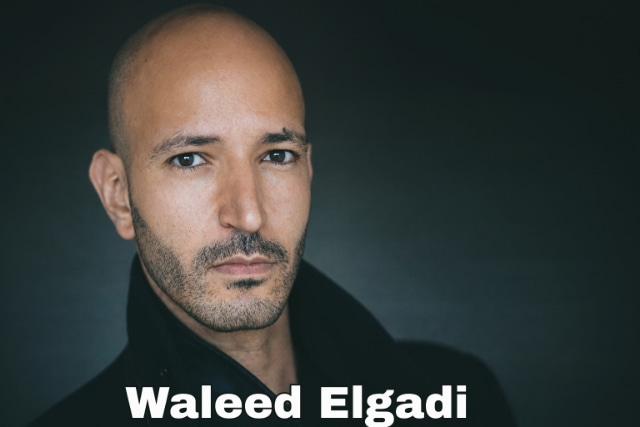
Waleed Elgadi: biography, acting roles and career highlights
Waleed Elgadi is an actor and writer with credits across film, television and theatre. Readers often search his name to learn where they have seen him before, or to get a quick view of his background and career.
Public profiles describe Waleed Elgadi as British-Sudanese. They also connect him with titles such as Mosul, Hijack, Four Lions and Alexander: The Making of a God.
This profile brings those details together in a simple, readable way. It focuses on verified credits and publicly available background information rather than guesswork or inflated claims.
Who is Waleed Elgadi?
Waleed Elgadi is a British-Sudanese actor and writer. IMDb lists his birth in Khartoum, Sudan, while a later interview with Hyphen says he moved to the UK at the age of 11 and is based in east London.
That background helps explain why his work often stands out in both British and international productions. He has built a career across screen and stage, and public event biographies also describe him as a writer and activist alongside his acting work.
For readers searching for a quick answer, the simplest description is this: Waleed Elgadi is a working actor and writer whose career includes mainstream screen credits, theatre work and socially engaged creative projects.
Waleed Elgadi screen roles and notable credits
A large share of interest in Waleed Elgadi comes from his screen work. IMDb lists him in productions including Alexander: The Making of a God and Mosul, while Apple TV’s credits page also connects him with Hijack, One Shot, One More Shot and A Hologram for the King.
He is also associated with Four Lions, a title that still attracts regular attention from film viewers. That matters because many biography searches are not driven by celebrity news. Instead, they come from people who recognise a face or name from a previous role and want reliable context.
Netflix’s Tudum coverage confirms Alexander: The Making of a God as a 2024 Netflix docudrama series. That makes it one of the more recent credits likely to push fresh search traffic around Waleed Elgadi, especially among viewers looking up cast members after watching the show.
Waleed Elgadi beyond film and television
Waleed Elgadi is not only linked with screen acting. A public event biography for Shubbak Festival 2025 describes him as a British-Sudanese actor with more than 23 years of stage and screen experience. The same bio says he made his writing debut in 2018 with What Is Worth Living For, a self-penned monologue performed at the Globe Theatre.
That event biography also says he developed his first play, Ghost House, during a residency with the Sundance Theatre Lab. In addition, it notes that he later contributed new work to Cutting the Tightrope at the Arcola Theatre. These details matter because they show that his creative work extends beyond acting credits alone.
Recent public listings also place him in wider Sudanese cultural work. For example, Grand Junction’s Shubbak Festival page says he co-curated For Sudan in 2025, and Hyphen describes him as focused on socially conscious storytelling, particularly in relation to Sudan.
Why people search for Waleed Elgadi
Most readers searching Waleed Elgadi want one of three things. They want a simple biography, a list of roles, or context around why his name appears in film, TV or cultural coverage.
That is why a useful article should stay practical. It should explain his background, mention the productions most audiences know, and avoid adding claims that are not clearly supported. In Waleed Elgadi’s case, the strongest public references point to a career that moves between commercial screen work and more personal creative projects.
Readers who want to verify credits directly can check Waleed Elgadi on IMDb, Waleed Elgadi on Apple TV, and Hyphen interview with Waleed Elgadi.
Final thoughts on Waleed Elgadi
Waleed Elgadi is best understood as a British-Sudanese actor and writer with a varied career across film, television and theatre. Public sources consistently connect him with work such as Mosul, Hijack, Four Lions and Alexander: The Making of a God, while newer profiles also highlight his writing and cultural work.
For a general UK magazine site, that makes Waleed Elgadi a strong informational profile topic. The search intent is clear, the audience is broad, and the article works best when it stays factual, readable and focused on verified career highlights.
FAQs
Who is Waleed Elgadi?
Waleed Elgadi is a British-Sudanese actor and writer. Public sources link him with film, television and theatre work.
What is Waleed Elgadi known for?
Waleed Elgadi is known for credits that include Mosul, Hijack, Four Lions and Alexander: The Making of a God.
Where is Waleed Elgadi from?
IMDb lists Waleed Elgadi as born in Khartoum, Sudan. A later interview says he moved to the UK when he was 11.
Is Waleed Elgadi also a writer?
Yes. Public event biographies describe Waleed Elgadi as a writer as well as an actor, and they mention stage and writing projects including What Is Worth Living For and Ghost House.
Why are people searching for Waleed Elgadi?
Many readers appear to be looking for a biography, a list of roles, or more context after seeing Waleed Elgadi in a film, series or cultural feature. That fits a clear informational search pattern.