When Should You Add a Drop in a Track? The Ultimate Guide
Every great dance song relies on pure energy. The initial build-up creates a sense of excitement. Then, the musical release brings the crowd to life. However, timing is everything in music. So, when should you add a drop in a track?
Getting this timing right changes your whole production. If you add it too early, the song feels incredibly rushed. If you wait too long, your listeners might get bored. Therefore, finding the sweet spot is vital.
In this guide, we will explore standard track arrangement. We will help you understand musical tension and release. As a result, your next song will hit harder and sound more professional.
Understanding the Structure of a Song
Before planning your climax, you must understand basic song structure. Most electronic music follows a very standard formula. For example, a track often starts with a quiet intro. Next, it slowly moves into a verse.
After the verse, you will usually hear a build-up. This section steadily raises the overall energy level. Finally, the climax of the song hits. This is where the heavy bass and loud lead synths come in.
Different genres naturally use slightly different structures. However, the core idea always remains exactly the same. You need a steady, engaging journey from start to finish. Therefore, placing your climax correctly keeps the journey exciting.
So, When Should You Add a Drop in a Track?
Many beginners ask, exactly when should you add a drop in a track? Generally, the first major impact happens around the one-minute mark. For pop and mainstream EDM, it often lands between 45 seconds and 1 minute 15 seconds.
However, longer genres like techno or progressive house are very different. In these styles, the climax might not happen until three minutes in. Therefore, you must always consider your specific genre first.
Furthermore, you should count your musical bars. Most producers use structured groups of 16 or 32 bars. A common structure places the release right after a 16-bar build-up. This keeps the timing predictable for club DJs. It also feels very natural to the human ear.
Building Tension Before the Climax
A great release relies entirely on the tension before it. If the energy stays completely flat, the climax will feel incredibly weak. Therefore, you must build excitement slowly and carefully.
Start by adding new elements to your mix. For example, introduce a fast snare roll. As a result, the listener naturally anticipates something big. Meanwhile, you can use rising synth pitches. This is a classic trick used in modern dance music.
In addition, use automation to smoothly build tension. You can open a low-pass filter over time. Alternatively, you can slowly increase the volume of certain tracks. Overall, the goal is to make the listener actively crave the release. [Sound on Sound for expert mixing advice]
The Role of the Build-Up
The build-up is just as important as the climax itself. This section acts as a vital musical bridge. It connects the quiet verse to the loud chorus. Therefore, it always needs careful attention.
During the build-up, you should remove the low-end frequencies. Taking out the heavy bass tricks the human brain. It makes the listener miss the deep, powerful sounds. Then, when the bass finally returns, it hits with massive power.
Additionally, use risers and sweep effects. White noise sweeps are incredibly popular in electronic music. They fill the empty frequency space and push the energy upward. Finally, slowly shorten your drum patterns. Move from steady quarter notes to rapid 16th notes.
Using Silence for Maximum Impact
Sometimes, the best sound is absolutely no sound at all. Using a brief moment of total silence is a highly powerful tool. This technique is often called a drop out.
Try completely muting all instruments for one or two beats. Do this right before the heavy beat hits. As a result, the sudden silence actually shocks the listener. It creates a temporary audio vacuum.
When the beat finally crashes back in, it instantly sounds twice as loud. For example, you can add a single vocal shout during this short silence. This technique easily creates a highly memorable hook. Overall, strategic silence is your secret weapon.
Understanding Different Genres
Timing varies wildly across different styles of modern music. Therefore, knowing your specific genre is absolutely essential. For instance, dubstep heavily relies on a sudden, heavy impact. The tension is usually very aggressive.
In contrast, deep house takes a much smoother approach. The climax is more about introducing a deep, rolling bassline. It feels far less aggressive and more groovy. As a result, the build-up is often quite subtle.
Trance music is famous for creating epic, emotional journeys. The build-ups can easily last for over a full minute. The musical release brings massive euphoria to the dancefloor. Therefore, study the specific traits of the style you actually want to make.
The Importance of Reference Tracks
Using a reference track is always highly recommended. It helps you quickly understand professional arrangements. Simply drag a popular, professional song directly into your digital audio workstation.
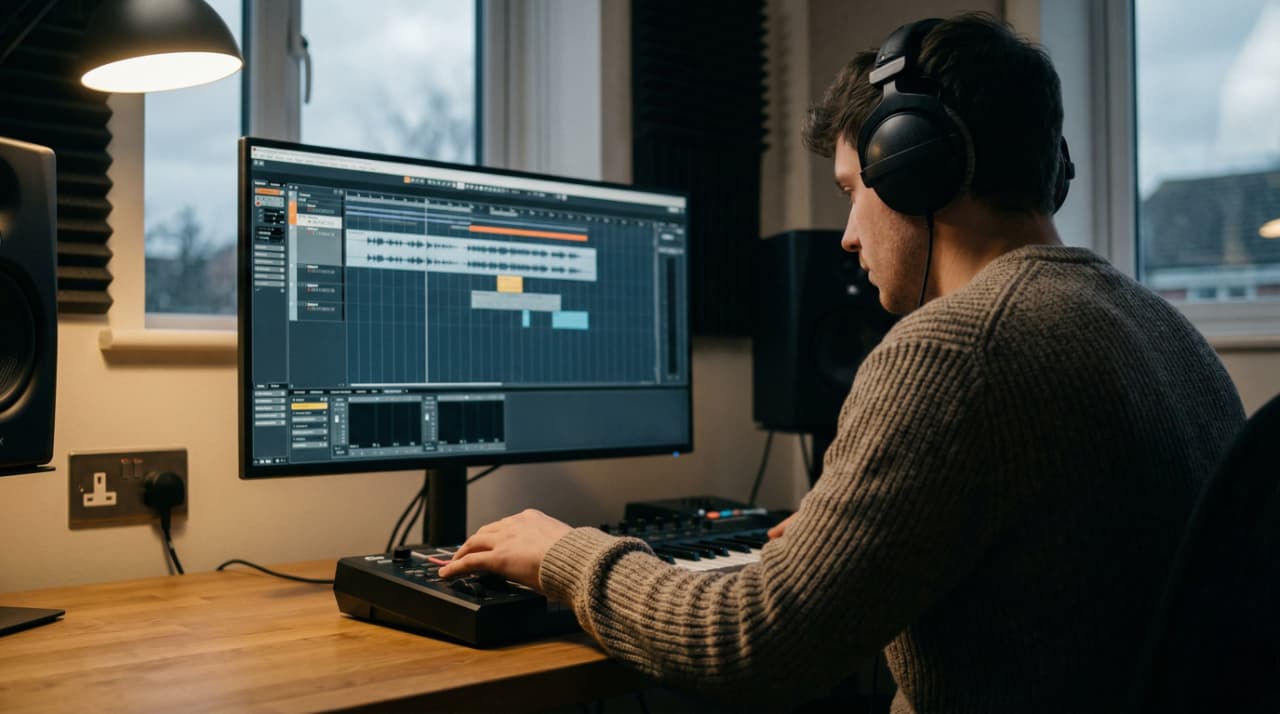
Next, closely look at the audio waveform. You can visually see exactly where the loud and quiet parts are. Place markers in your project to accurately map out their structure. This provides a brilliant template for your own work.
For example, note exactly when their first build-up starts. Note exactly when the sub-bass completely cuts out. Finally, see exactly when they add a drop in their track. Doing this removes a massive amount of guesswork from your production.
Layering Your Synths for the Climax
A powerful climax always needs thick, rich, and wide sounds. A single synthesizer will often sound far too thin. Therefore, you should learn how to properly layer your synths. This is a highly crucial production skill.
Start with a very strong lead sound. This will be the main melody. Next, add a secondary layer an octave higher. This naturally adds brightness and air to the mix. Meanwhile, add a lower layer to provide essential warmth and body.
However, be very careful with your equalisation. You must carve out frequency space for each layer. Otherwise, the final mix will sound muddy and messy. Finally, glue the layers together with some light compression. As a result, they will sound like one massive, unified instrument.
Keep Your Energy Consistent
Once the release hits, the energy must absolutely stay high. You have carefully built up all this excitement. Now, you must consistently deliver the final payoff. Therefore, make sure your mix is full, loud, and wide.
Use sidechain compression to make your kick drum punchy. This creates a classic rhythmic pumping effect. It is completely essential for modern dance music. In addition, ensure your sub-bass is very clean and powerful.
Meanwhile, keep the overall arrangement interesting. Do not just loop the exact same four bars forever. Instead, add a new hi-hat or percussion loop every eight bars. This successfully keeps the momentum going strong.
Mistakes to Avoid With Your Arrangement
Many new producers make the exact same arrangement mistakes. Firstly, they make the initial build-up far too long. If it drags on, the listener quickly loses interest. Always keep it tight and highly focused.
Secondly, they accidentally make the climax too quiet. It should undeniably be the loudest part of the whole song. Therefore, check your master volume levels very carefully. Use visual meters to constantly compare your mix.
Finally, heavily avoid adding too many sounds at once. A cluttered mix always sounds messy and unprofessional. As a result, the primary impact is completely lost. Keep your sounds big, but keep the number of tracks manageable. Less is very often more in electronic music.
Conclusion
Arranging a successful song takes real practice and patience. The exact timing of your climax defines the energy of the whole song. So, when should you add a drop in a track? It heavily depends on your specific genre and pacing.
However, aiming for the one-minute mark is a brilliant starting point. Remember to build musical tension very carefully. Use audio filters, fast snare rolls, and even moments of sudden silence. Consequently, your finished songs will have maximum impact.
Keep actively experimenting with different musical structures. Eventually, you will naturally find exactly what works best for your own style. Good luck, and happy producing!
FAQs
When should you add a drop in a track for pop EDM?
For pop EDM, it usually hits between 45 seconds and 1 minute 15 seconds. This fast pacing keeps radio listeners fully engaged.
How long should a musical build-up last?
A standard build-up normally lasts for 8 to 16 bars. However, longer genres like techno may use 32 bars to build tension.
What makes a beat drop hit harder?
Removing the bass frequencies entirely during the build-up makes the climax hit harder. A brief moment of silence right before it also adds massive impact.
Can a song have more than one heavy drop?
Yes, most modern dance tracks have at least two. The second one often features slight musical variations to keep the listener interested.
Do all electronic songs need a heavy drop?
No, not all genres need one. Ambient or chillout music relies heavily on smooth, continuous flows rather than sudden, loud impacts.